
How to identify a Squirrel Infestation
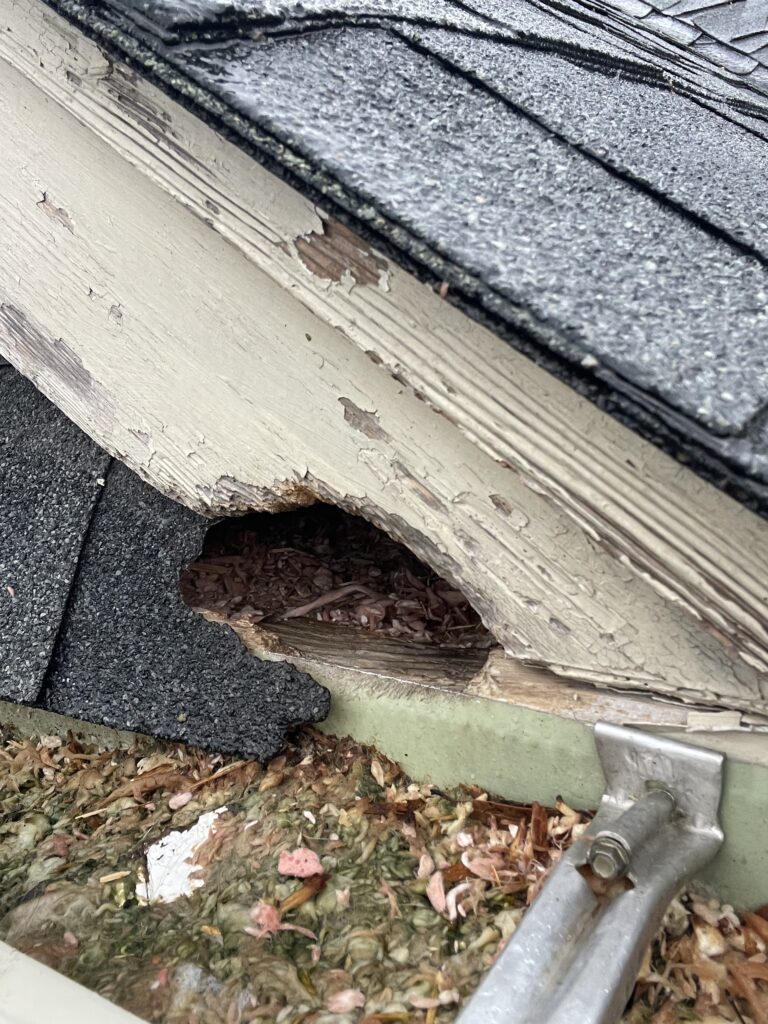
Squirrels frequently travel across roofs while searching for food, shelter, or potential entry points. If you repeatedly see squirrels around your soffits, fascia, roof returns, vents, or eaves, they may be investigating a way into your home.
Addressing these vulnerable areas early can help prevent squirrels from establishing themselves inside your attic. Realtech Wildlife can inspect the exterior of your home and identify areas that may need attention.
How do squirrels get into my attic?
Squirrels can enter through surprisingly small or vulnerable areas around your home. Common entry points include damaged soffits, fascia, roof returns, vents, roofline gaps, and other openings.
Realtech Wildlife performs a thorough inspection to locate the entry points squirrels are using and determine what needs to be repaired or sealed to prevent them from getting back inside.
How do I know if I have squirrels in my attic?
Squirrels can cause significant damage when they gain access to your attic, walls, or roof. Common signs include scratching or scurrying sounds, chewed wiring, damaged soffits or fascia, squirrel droppings, disturbed insulation, nests, and squirrels repeatedly getting on your roof.
At Realtech Wildlife, we look at the complete picture—including droppings, scratch marks, nesting material, food that squirrels may be storing, and potential entry points—to determine what animal is causing the problem.
What do squirrels in the attic sound like?
Squirrels commonly make scratching, scurrying, gnawing, and running sounds. These noises are often heard during the early morning or late afternoon because squirrels are primarily active during the day.
If you are hearing scratching or movement mainly after dark, another animal, such as raccoons or mice, may be responsible. Realtech Wildlife can inspect the attic and surrounding areas to identify the animal and determine how it is getting inside.
What to do if I hear scratching in my attic?
Daytime scratching, scurrying, or running sounds can be a strong indication of squirrel activity. Squirrels may be moving around the attic, searching for food, building a nest, or traveling to and from an entry point.
During an inspection, Realtech Wildlife looks for additional evidence such as droppings, scratch marks, nesting material, stored food, damage, and entry points to help confirm whether squirrels are present.
Can squirrels damage electrical wiring?
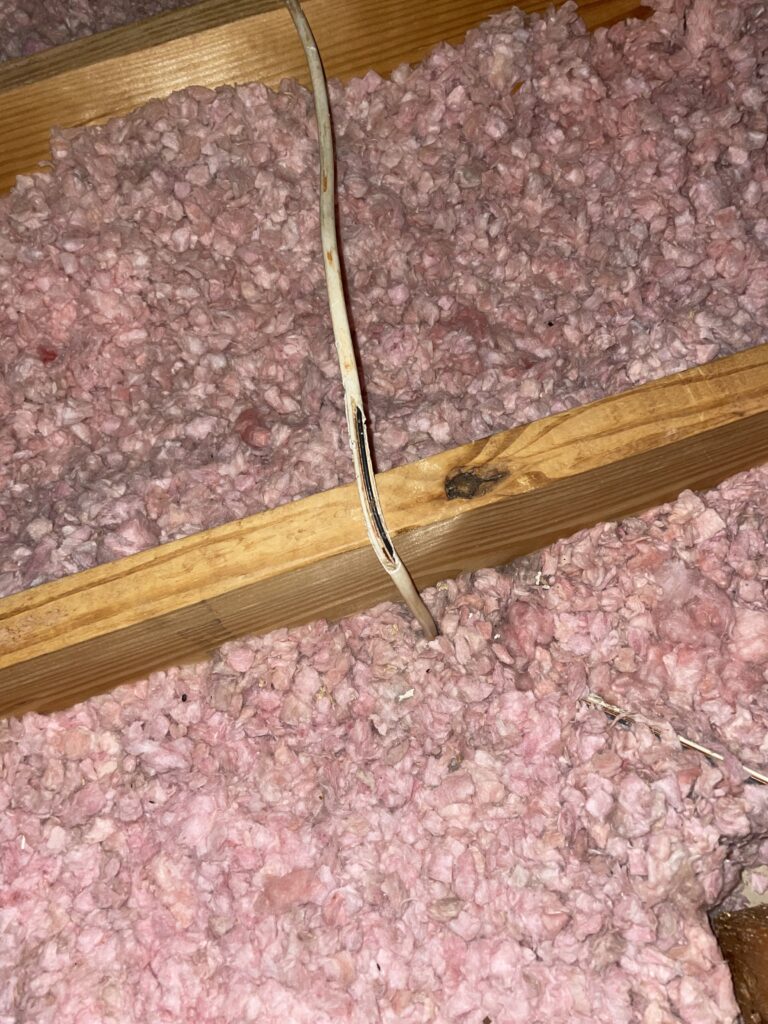
Yes. Squirrels naturally gnaw on materials because their teeth continuously grow. Electrical wiring can be one of the materials they damage, and exposed or damaged wiring can create a serious fire hazard.
If you find chewed electrical wires, have them inspected by a qualified electrician and contact Realtech Wildlife to address the wildlife problem. Removing the squirrels and properly sealing their entry points can help prevent additional damage.
Can squirrels damage attic insulation?
Yes. Squirrels may pull apart, burrow through, or shred insulation while creating a nesting area. You may notice displaced insulation, tunnels, flattened areas, or insulation gathered into a nest.
The amount of damage can vary significantly. Realtech Wildlife can evaluate the condition of the attic and determine whether the damage requires localized repairs or more extensive attic restoration.
What do squirrel droppings look like?
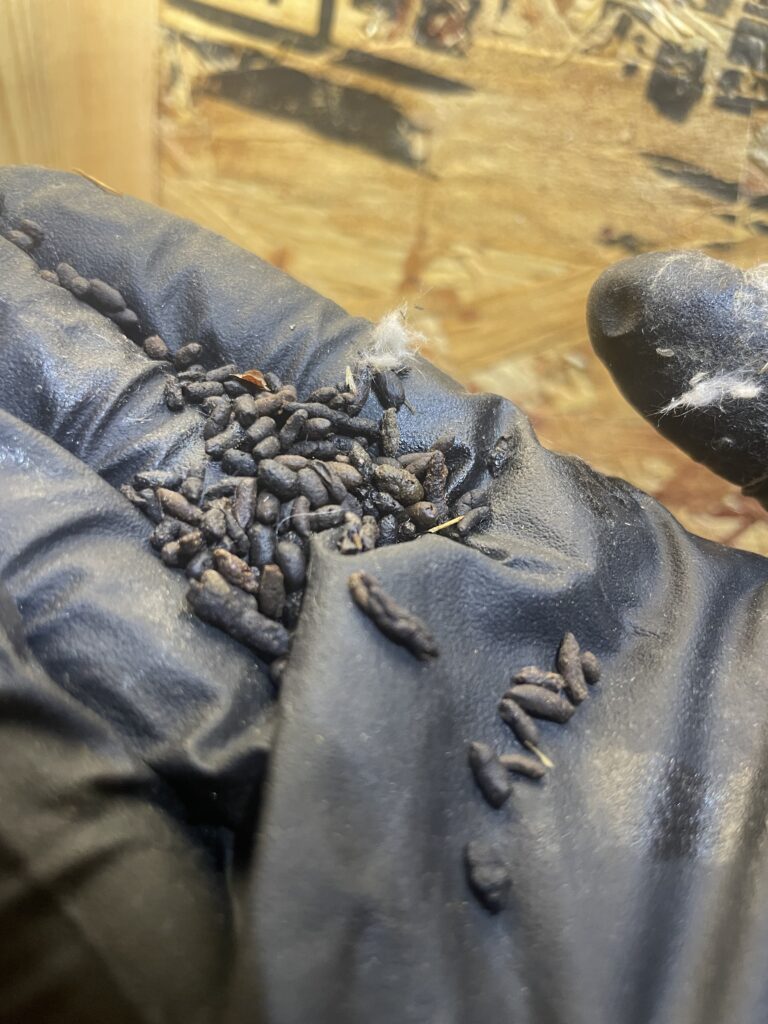
Squirrel droppings may be found near nesting areas, travel routes, or locations where squirrels regularly enter and exit. However, other wildlife can leave droppings in attics as well.
That’s why droppings should be considered along with other evidence, including nesting material, damage, food storage, tracks, and entry points. Realtech Wildlife can inspect the evidence and help determine what animal is using the space.
Squirrel droppings may be found near nesting areas, travel routes, or locations where squirrels regularly enter and exit. However, other wildlife can leave droppings in attics as well.
That’s why droppings should be considered along with other evidence, including nesting material, damage, food storage, tracks, and entry points. Realtech Wildlife can inspect the evidence and help determine what animal is using the space.
What does a squirrel nest look like?
Squirrel nests, sometimes called dreys, can be made from shredded insulation, paper, cardboard, fabric, leaves, and other materials. Attics provide squirrels with a protected environment that can be ideal for nesting.
If you discover a squirrel nest, avoid disturbing it. Squirrels can become defensive, especially when young are present. Realtech Wildlife can inspect the nest and determine whether squirrels are actively using the area.
What should I do if I think squirrels are in my attic?
Don’t wait for the problem to get worse. Squirrels can damage insulation, wiring, roofing materials, soffits, fascia, and other areas of your home.
Realtech Wildlife provides professional squirrel removal and exclusion services throughout Spartanburg, Greenville, Pickens, and Anderson counties. When we begin a squirrel removal job, we stay actively involved until the issue is resolved and the squirrels are gone.
Our goal is not simply to remove the squirrels—we work to identify how they got inside and address the entry points to help prevent the problem from happening again. If you are hearing noises in your attic, seeing squirrels around your roof, or finding signs of wildlife inside your home, contact Realtech Wildlife for a professional inspection.