

Common Signs of Snakes and how to remove
Common Signs of Snakes and How to Remove Them From Your Home
Snakes can be difficult to detect because they often stay hidden in crawl spaces, attics, garages, sheds, basements, and other secluded areas. However, there are several signs that may indicate a snake has entered your home or is regularly moving around your property.
Knowing what to look for can help you identify snake activity early, find potential entry points, and determine when professional snake removal may be necessary.
How Do I Know If I Have Snakes in My House?
The most obvious sign of a snake is seeing one. However, you may notice other evidence of snake activity even if you never see the animal itself.
Common signs of snakes in or around your home include:
- Seeing a snake inside or around your property
- Finding shed snake skin
- Finding snake droppings
- Noticing snake tracks or trails
- Repeated snake activity around potential entry points
Seeing a Snake
If you see a snake inside your home, garage, crawl space, attic, or another enclosed area, there is a good chance it has found a way inside.
Even if the snake disappears, that does not necessarily mean it has left the property. Snakes can quickly retreat into walls, crawl spaces, attics, or other concealed areas.
Do not attempt to catch or handle the snake yourself. If you are unsure what type of snake you are dealing with, it is safest to keep your distance and contact a professional.
Finding Shed Snake Skin
Finding pieces of shed skin can be a strong indication that a snake has been using an area. Shed skin may be found in crawl spaces, garages, attics, underneath decks, around foundations, or near other places where snakes may hide or travel.
Finding Snake Droppings
Snake droppings can also indicate that a snake has been using an area. They are generally dark in color and may have a noticeable white portion caused by uric acid.
Droppings can sometimes be difficult to identify, especially when other wildlife has access to the same area. If you find unusual droppings along with other signs of snake activity, a wildlife professional can help determine what may be causing them.
Finding Snake Tracks or Trails
Snakes can leave winding or S-shaped trails as they move through dirt, dust, mulch, sand, and other soft surfaces.
Look for tracks around foundations, underneath decks, through landscaping, near crawl-space entrances, or around other areas where snakes may be traveling.
Activity Around Entry Points
If you repeatedly notice snakes near your foundation, crawl-space vents, garage, doors, or other openings, there may be an accessible entry point.
Gaps around foundations, vents, plumbing penetrations, utility lines, siding, and doors can potentially give snakes access to a structure.
What Does Snake Poop Look Like?
Snake poop is typically dark in color and may look similar to droppings from other animals. One distinguishing feature is a white or chalky portion, which is caused by uric acid.
Snake droppings may be found in crawl spaces, garages, sheds, attics, or other areas where snakes have access.
Finding droppings by itself does not always confirm that you have snakes. However, if you find what appears to be snake feces along with shed skin, tracks, or sightings, these signs may indicate ongoing snake activity.
Where do snakes hide in Houses?
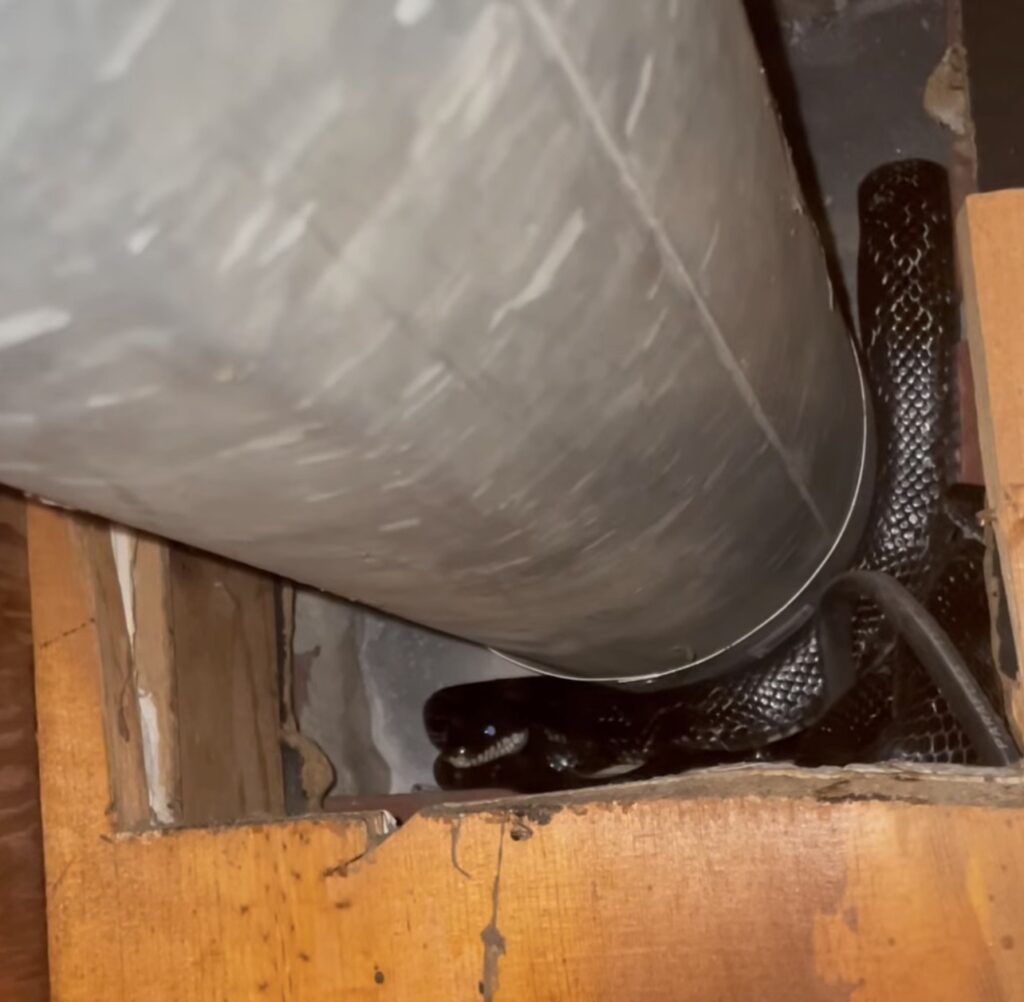
Snakes prefer quiet, sheltered areas where they can remain undisturbed. If a snake gets inside your home, it may seek out a dark or secluded location rather than remaining in an open area.
Common places where snakes may hide include:
- Crawl spaces
- Attics
- Garages
- Basements
- Sheds
- Underneath porches and decks
- Behind stored items
- Around insulation
- Wall voids and other concealed spaces
Snakes may enter these areas while searching for shelter, food, or a way to move between outdoor locations.
If you see a snake disappear into a crawl space, wall, attic, or another inaccessible area, avoid disturbing the area and contact a professional wildlife removal company.
How Do Snakes Get Into Houses?
Snakes can take advantage of surprisingly small openings to get inside a home. They may enter through gaps or openings around the foundation, crawl-space vents, doors, plumbing, utility lines, siding, and other exterior penetrations.
Potential entry points include:
- Gaps around foundations
- Damaged or improperly screened crawl-space vents
- Gaps underneath doors
- Openings around plumbing pipes
- Utility line penetrations
- Gaps around siding
- Garage door openings
- Other holes or cracks along the exterior of the home
Snakes may also enter areas such as garages, sheds, and crawl spaces before eventually finding their way into other parts of a property.
Finding and sealing potential entry points can be an important part of preventing future snake activity.
What does a Snake skin look like?
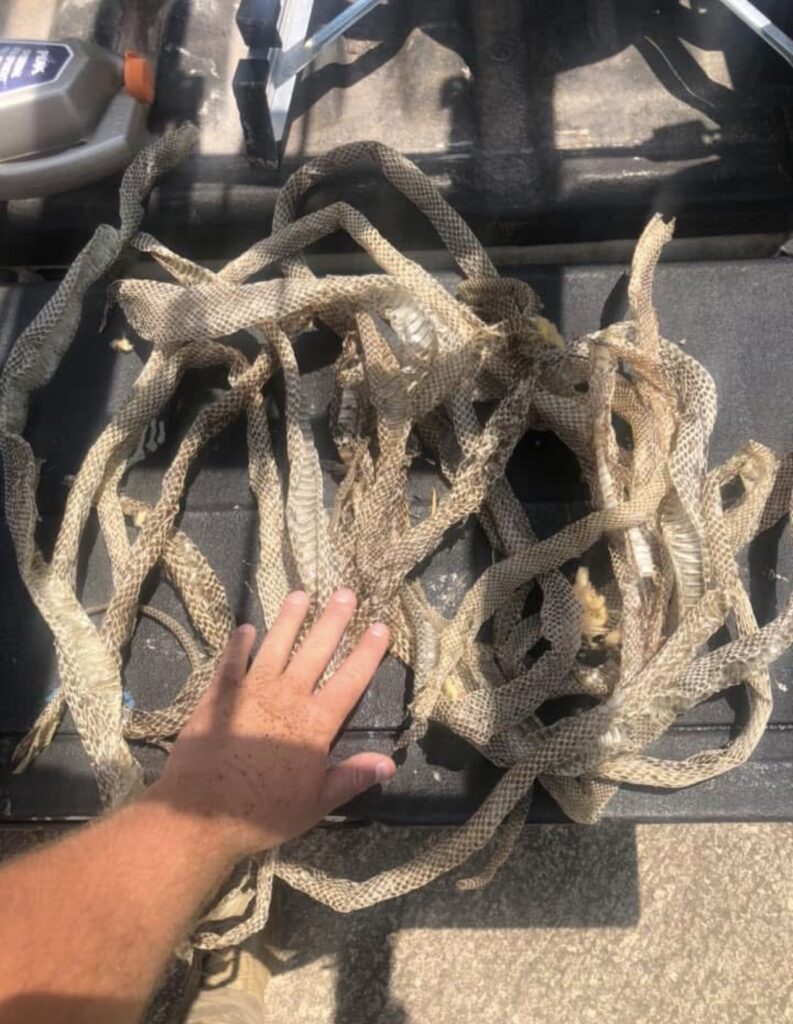
Snake shed skin is usually thin, dry, and translucent. It may look like a long, curled piece of clear or pale-colored material and can sometimes be recognized by the scale pattern.
You may find shed skin in areas where a snake has been hiding or traveling, including crawl spaces, attics, garages, sheds, underneath decks, and around foundations.
Finding shed skin does not necessarily mean that a snake is still present. However, it does indicate that a snake has been in the area recently enough to shed its skin there.
If you repeatedly find shed skin around your home, it may be worth having the property inspected for potential snake entry points and hiding areas.
What Should I Do If I Find a Snake in My House?
If you find a snake inside your house, the most important thing is to avoid getting too close or attempting to catch it yourself.
Keep children and pets away from the area and give the snake as much space as possible. If you can safely do so, keep the snake contained in the room where it was seen by closing doors or other openings.
Do not attempt to grab, trap, or kill the snake. Identifying the species from a safe distance can also be difficult, and attempting to handle an unfamiliar snake can result in an unnecessary bite.
If the snake disappears into a wall, crawl space, attic, or another inaccessible location, it may still be on the property. Professional wildlife removal can help locate and safely remove the snake.
When Should i call a professional for snake removal?
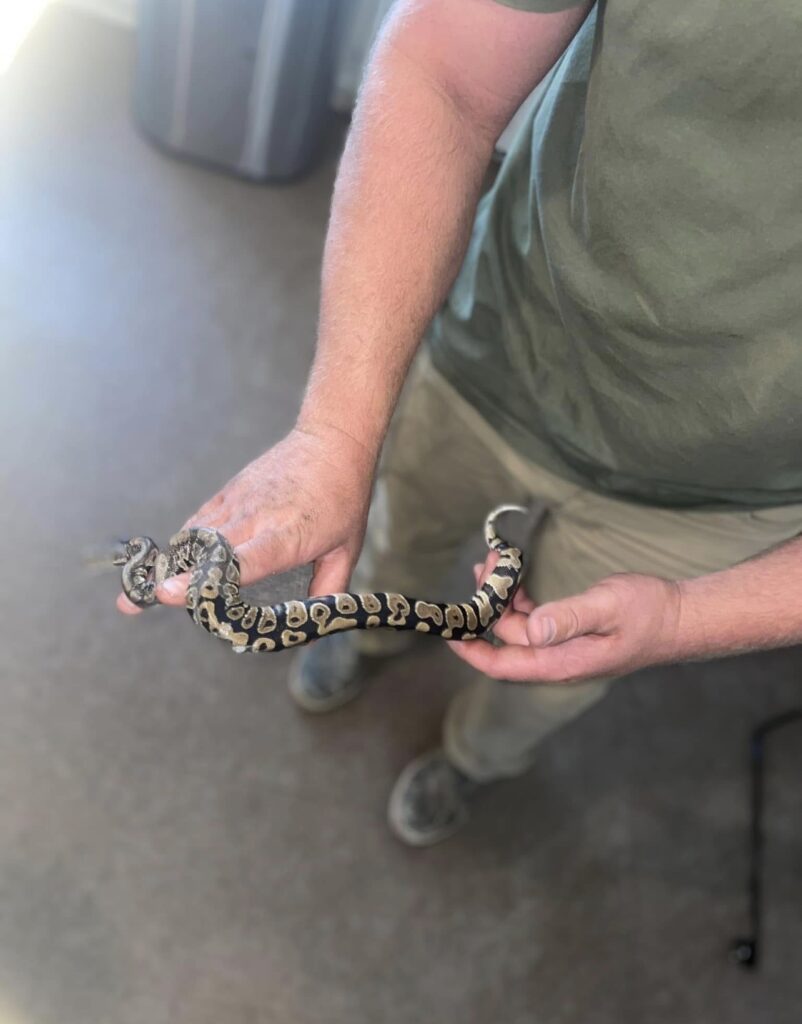
You should consider professional snake removal if you find a snake inside your home, repeatedly see snakes around your property, or discover signs such as shed skin or droppings in areas where snakes may be hiding.
Professional help is particularly important when:
- A snake has entered your living space
- A snake has disappeared into a wall, attic, or crawl space
- You are unable to safely identify the snake
- You repeatedly see snakes around your home
- You find repeated evidence of snake activity
- You suspect there is an entry point allowing snakes into your home
At Real Tech Wildlife, our goal is not only to safely remove the snake but also to help identify potential entry points that could allow additional snakes to get inside.
Snake exclusion can help address those access points and reduce the likelihood of future problems.
If you have seen a snake in or around your home, or you’re finding signs of snake activity, contact Real Tech Wildlife for professional snake removal and exclusion services.